Sleep Apnoea
Sleep apnoea is more than snoring: symptoms, health risks and testing.
Obstructive sleep apnoea (OSA) is linked to heart disease, stroke, high blood pressure, obesity and depression. Here is why repeated pauses in breathing matter — and how a home sleep test can help.
By Sámh · General sleep-health information
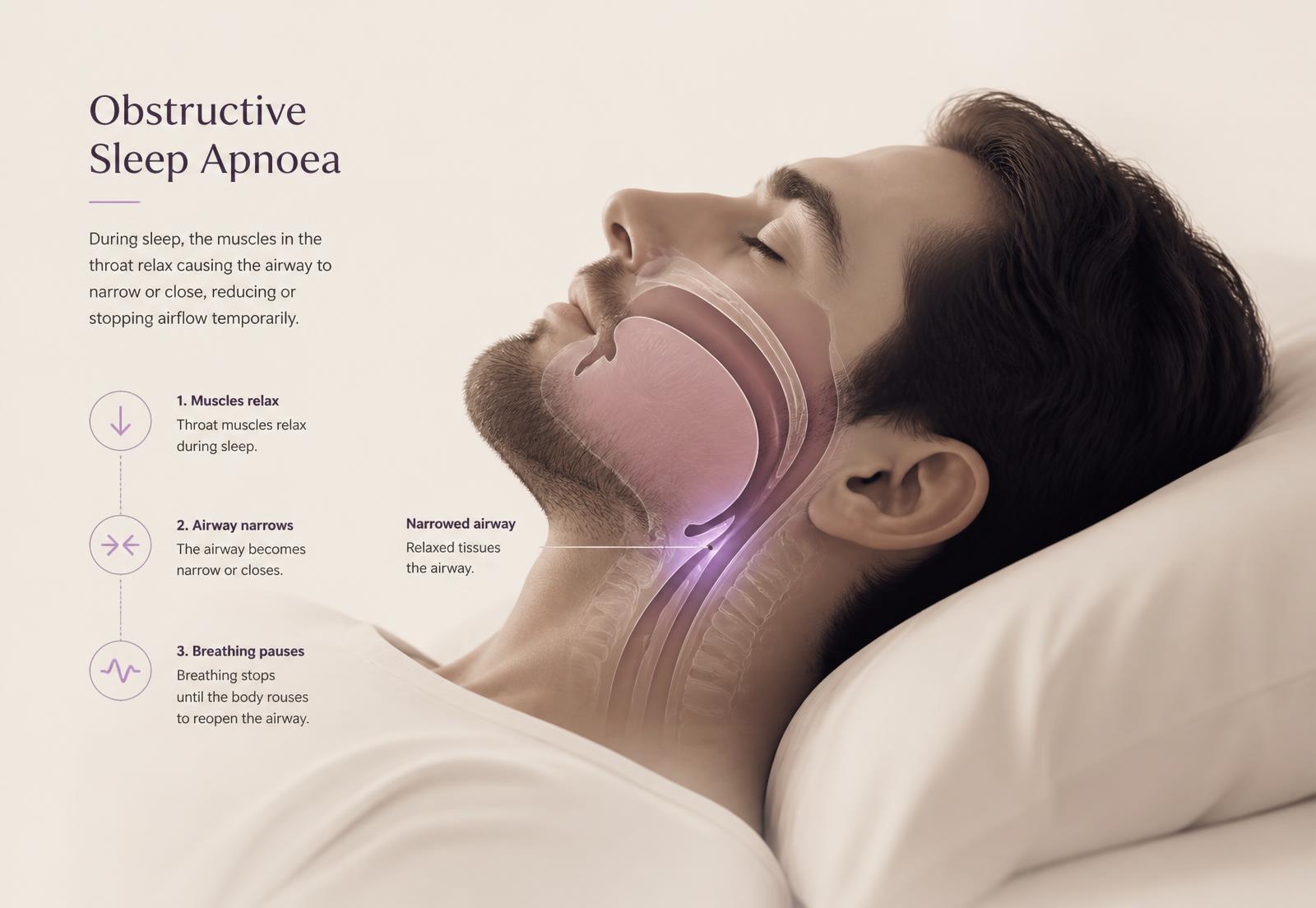
Snoring is often treated as a punchline. Obstructive sleep apnoea (OSA), in contrast, is a physiological problem that can affect many parts of the body over time — and it is one of the most under-diagnosed conditions in Ireland.
What is happening during an apnoea?
During sleep, the muscles that keep the upper airway open relax. In people with obstructive sleep apnoea, the airway repeatedly narrows or briefly closes. Breathing becomes shallower or stops for short periods, oxygen levels can drop, and the brain briefly rouses to reopen the airway.
These interruptions may happen many times each hour. Sleep looks intact from the outside, but the body is doing a great deal of work through the night.
Long-term health associations
Over time, this pattern has been associated with hypertension (high blood pressure), cardiovascular disease and heart attack, stroke, type 2 diabetes and obesity, and mood disorders including depression and anxiety. It is also associated with daytime effects — reduced concentration, low mood and higher accident risk on the road and at work.
The relationships are not simple and not everyone with sleep apnoea will develop these problems. But the associations are consistent enough that recognising and treating sleep apnoea early is worthwhile for many people. Effective treatment can mitigate several of these risks.
Recognising the symptoms
Common symptoms include loud snoring, witnessed pauses in breathing, waking gasping or choking, morning headaches, unrefreshing sleep and daytime sleepiness. Sleep apnoea can also present quietly — as poorly controlled blood pressure, or persistent tiredness without an obvious cause.
A home sleep test is a practical first step for many adults: you sleep in your own bed with a small reusable sensor, a clinician reviews the recording, and you get a phone call with your result and a personal recommendation on what to do next.
Sources and further reading
Take the next step