Sleep Apnoea
What is obstructive sleep apnea (OSA)? A simple explanation.
What obstructive sleep apnea is, what happens in your airway at night, how it differs from central sleep apnea, how it is diagnosed, and the main treatments.
By Sámh · General sleep-health information
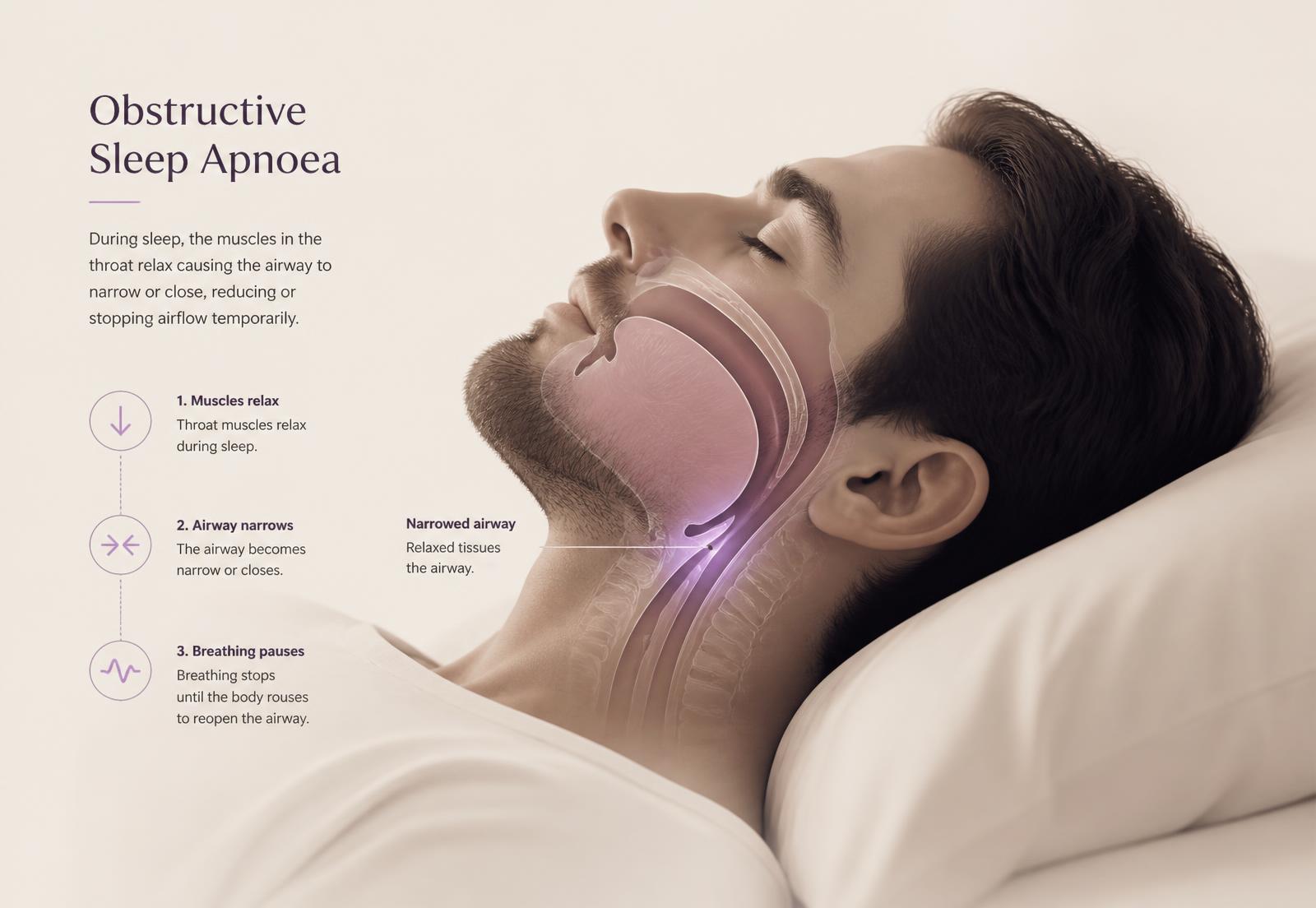
Obstructive sleep apnea, or OSA, is a condition where the throat narrows or closes over and over during sleep. Each time, breathing becomes shallow or stops for a few seconds, oxygen levels can dip, and the brain briefly wakes you to reopen the airway — usually without you remembering it.
What does 'apnea' mean?
An apnea (apnoea) is a pause in breathing. A hypopnea is a partial reduction in breathing. Clinicians count both, and the average number per hour of sleep — the apnoea-hypopnoea index, or AHI — is one of the main measures used to describe how severe sleep apnea is.
Obstructive versus central sleep apnea
In obstructive sleep apnea, the body keeps trying to breathe but the airway is blocked. It is by far the most common type. In central sleep apnea, the brain briefly stops sending the signal to breathe. Central sleep apnea is less common and is linked with conditions such as heart failure, some medicines, and stroke.
Why it matters
Repeatedly broken sleep and dips in oxygen put strain on the body. OSA is associated with high blood pressure, heart disease, stroke, type 2 diabetes and low mood, as well as daytime sleepiness and a higher risk of accidents. Treatment can improve how you feel and reduce some of these risks.
How it is diagnosed
Diagnosis needs a sleep test. For most adults with suspected OSA, a home sleep test is the usual first step: you wear a small sensor for a night in your own bed, and a clinician reviews the recording of your breathing, oxygen and heart rate. More complex cases may need an overnight hospital study.
How it is treated
Treatment depends on severity and symptoms. Options include weight loss, cutting back on evening alcohol, sleeping on your side, a custom dental device that holds the jaw forward, and CPAP — a machine that gently keeps the airway open with air pressure through a mask. Your clinician will recommend what suits you.
Sources and further reading
Take the next step